


Connecticut is not Athens.
This was Governor Jonathan Trumbull Sr.’s response to his son John’s persistence at becoming a painter. While the younger Trumbull “pined for the arts,” his father was not supportive of his career choice. John recalled trying to change his father’s mind by calling attention to “the honors paid to artists in the glorious days of Greece and Athens.” The older Trumbull replied, “You appear to forget, sir, that Connecticut is not Athens," and closed the conversation. Fortunately for the arts, John did not take his father’s advice and travelled to Europe for training, having “decided in favor of the pencil” as his future.
Last month, we were delighted to visit the Governor Jonathan Trumbull House, located in Lebanon, Connecticut, with views of the town’s scenic Green. Daughters of the American Revolution is restoring the Trumbull House in order to invite more visitors to learn about the life of Governor Trumbull, who was the only one of the thirteen colonial governors to support the American Revolution.
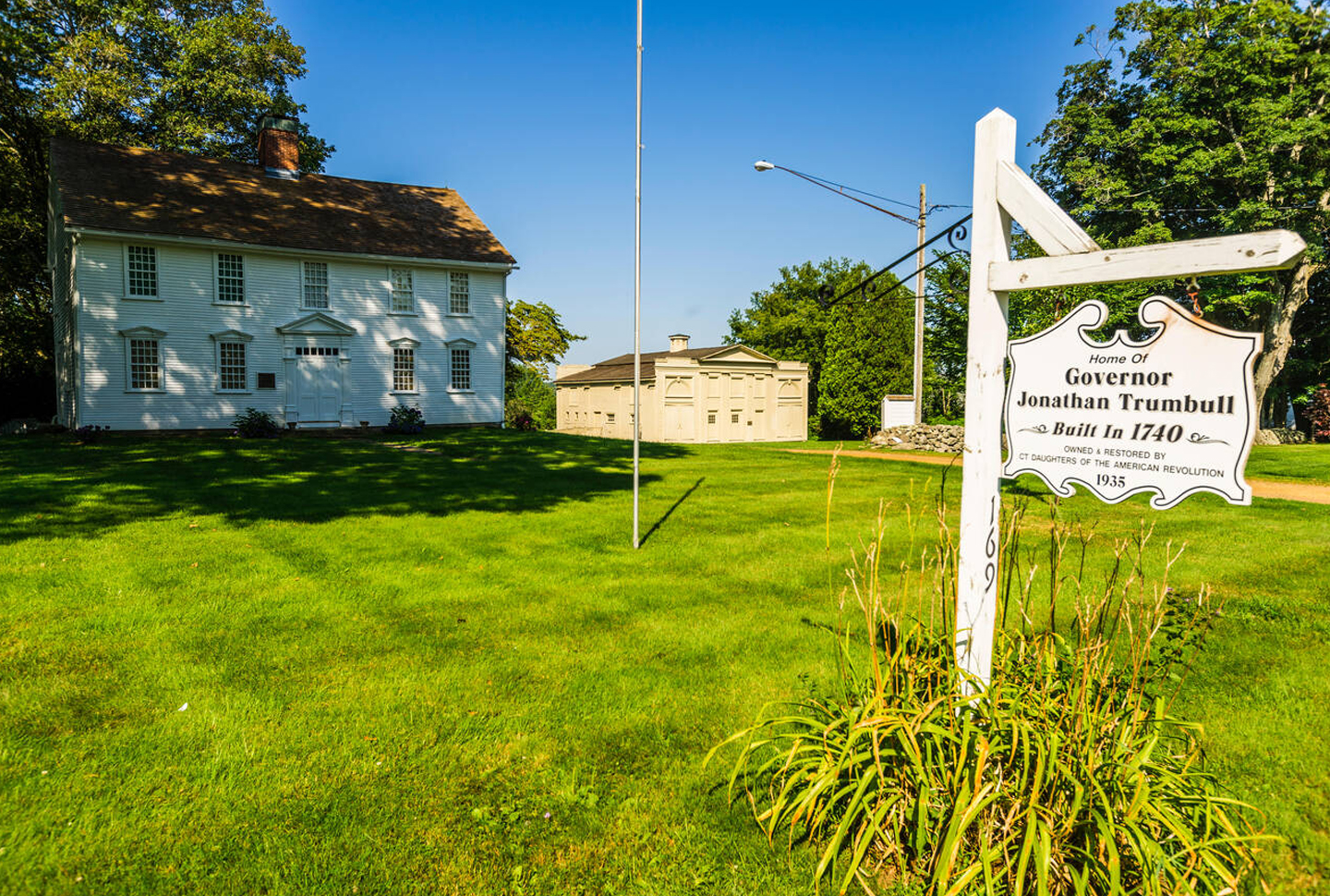
They offer docent-led tours and their typical audience are local students and those already interested in the Revolution and Connecticut’s history. Tours bring the largest number of visitors during peak holiday times such as Christmas. Although a small town of just over 7,000, Lebanon was a site that was central to the politics of colonial Connecticut. And the interpretive elements we are creating for the house tell the story of a man who was key to the success of the Revolution, his son who captured the spirit of the early United States through his painting, and a family who suffered in wartime.
Visitors will enter the house through a side door, currently under construction to add an ADA-compliant ramp, and step into the small Visitor’s Center.
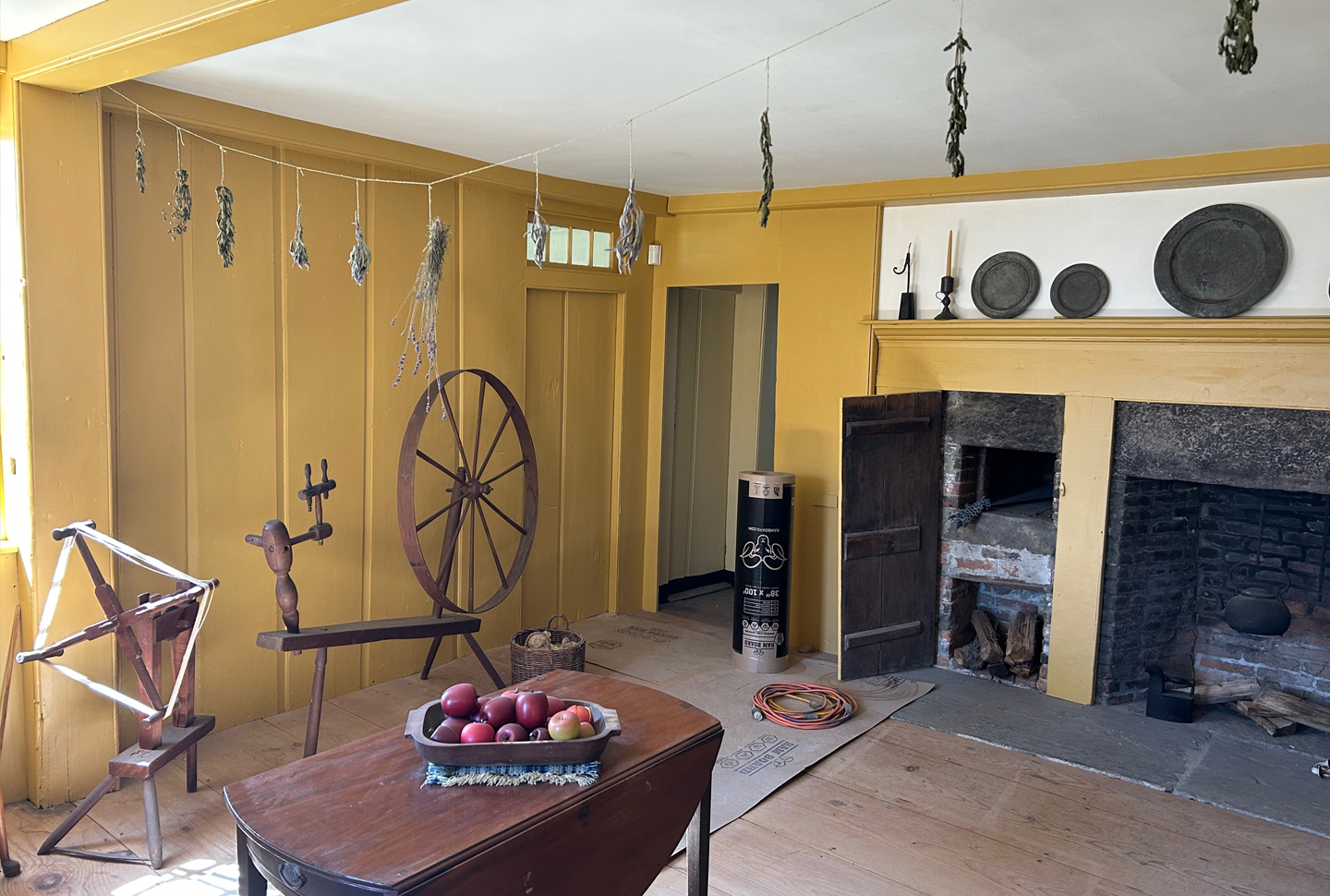
Each room will have a theme, and that of the first room on the tour – the kitchen – is “Women’s Work.” In this space, women and children produced the garments and meals that sustained life in this eighteenth century home, as is evident in the wooden spinning wheel and metal coffee roaster. The herbs hanging from the ceiling to dry would have been taken from the garden just outside the door. This space would have been occupied primarily by housekeeper Mrs. Hyde and enslaved Black women and children – here we highlight Grace and her son Isaac.
While New England may not have as strong an association with slavery as the US South, slavery was a common practice in Connecticut at this time. (The Royall House and Slave Quarters in Medford, MA is a well-preserved example.) To create her presence, this space will feature a life-size silhouette of Grace on clear acrylic in a colonial era engraving style of illustration. This stands in contrast to the portraits of the Trumbull family members elsewhere in the house since enslaved people were rarely painted. The presence of enslaved people also creates tension in the established narrative of Trumbull as a democratic figure – he fought for the freedom of some people in the colonies but not others.
Next, the dining room – the space where the family entertained guests – spotlights the Trumbulls in society. The expense of glass windows and tall ceilings (both throughout the house) that made the room harder to heat demonstrated the family's wealth and prominence. The Trumbulls welcomed guests such as General Lafayette and Mohegan leader Zachary Johnson.
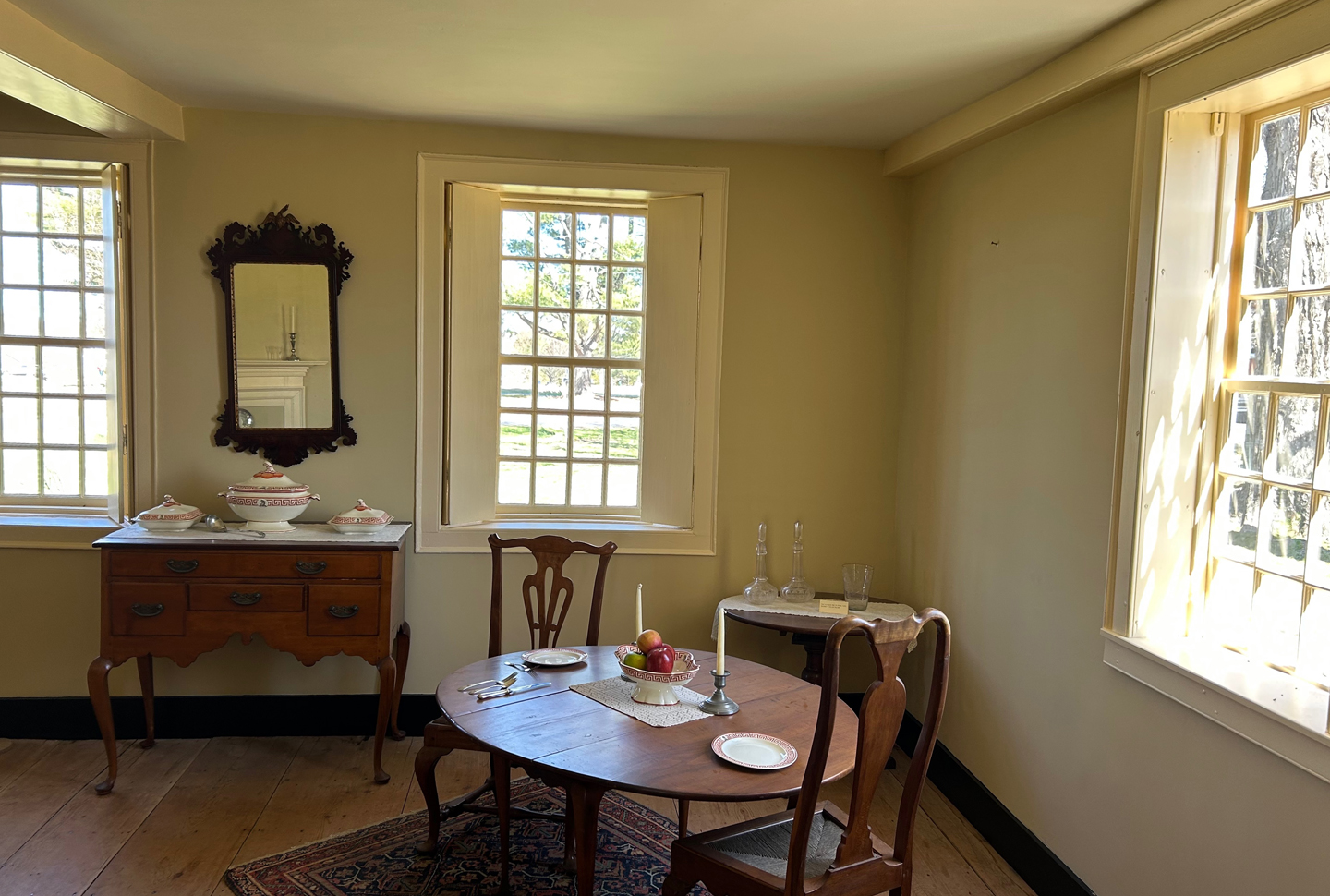
Several objects, such as china and silverware, feature the Trumbull coat of arms, and interpretation will unfold the lore around how the family came into their name.
This room will also cover preservation: an exposed inner wall – framed almost as a photograph – reveals the bones of the house, and an iPad video will demonstrate how the architects approached this room. The house underwent a restoration in the 1930s, then a larger one in the 1970s, and the architects must reconcile these restorations with what we now imagine the house to have looked like in the eighteenth century.
While visitors will come in through a side door, the Trumbull family entered their home through this grand entrance. Here visitors will learn about how the Mohegan Tribe lived in what is now Connecticut, the loss of their land to settlers, and how their society changed from a matriarchal to a patriarchal one to ensure their survival during European colonization.
Next on the tour, we encounter Trumbull in Peace and War. Although this room is an office, he did not actually work here but rather in his mercantile office, which was steps away from the house. Through objects such as an original map of the town and a portrait of Trumbull, visitors learn about the development of the town as well as Trumbull’s rising political prominence, even as his mercantile business declined. An acrylic silhouette of the servant Hector brings us back to the lives of the enslaved people who were a vital part of the running of the house and the family business.
The last room on the first floor, the rear parlour, brings the entire Trumbull family back into focus. Dedicated to the consequences of war, it explores the material and psychological sacrifices the family made during the Revolution. In particular, it sheds light on three sons – Jonathan, John, and Joseph (tracing these often-used names through the different generations of the Trumbull family can be difficult!) – who played important political and artistic roles in the early years of the new country.
This room also tells the tragic story of Trumbull’s daughter Faith, who hanged herself after an ill-timed visit to Boston that coincided with the Battle of Bunker Hill.
Next, visitors proceed up the front stairs to a landing on the second floor where we will display a landscape by John which will reflect the view of the Green from the nearby window. Visitors will be able to slide a map across the window to see the difference between Trumbull’s and today’s Lebanon.
The first room on this floor is referred to as Mrs. Trumbull’s bed chamber, since it was likely where Madame Trumbull slept, worked to supervise her farm and staff, and tended to any ill children. Visitors will be able to view the room, which will include a silhouette of enslaved Flora, from behind a rail. Here we encounter a problem all too familiar to those working with historic houses: most of the furniture in this room is from the Federal Period (the early nineteenth century), after the death of Governor and Madame Trumbull. The interpretation will note that the room as we see it was furnished by subsequent caretakers of the house through the twentieth century, and naturally changed with the fashion of the day and the tastes of different people.
Across the hall, another bedroom will feature feminine-associated arts and crafts that were often looked down upon and considered lesser than man-made “Art.” Women made the warm and heavy bed rugs that appear here and in other bedrooms. Another example that will be included in an artifact case is lace made by Trumbull’s daughter Faith; lace-making took years to learn to make and required painstaking attention to detail and pattern. These traditionally feminine-associated arts are not so distant from male-dominated painting: indeed, John gained some of his early artistic interest and abilities from his sisters – would he have become the great artist he was without them?
Connecticut is not Athens. Including this disapproving quote from his father outside John’s childhood bedroom further underlines the challenges with which John contended to become a respected painter. Here we tell the story of his life further, highlighting his fondness for painting and leaving the house in disarray from an early age.
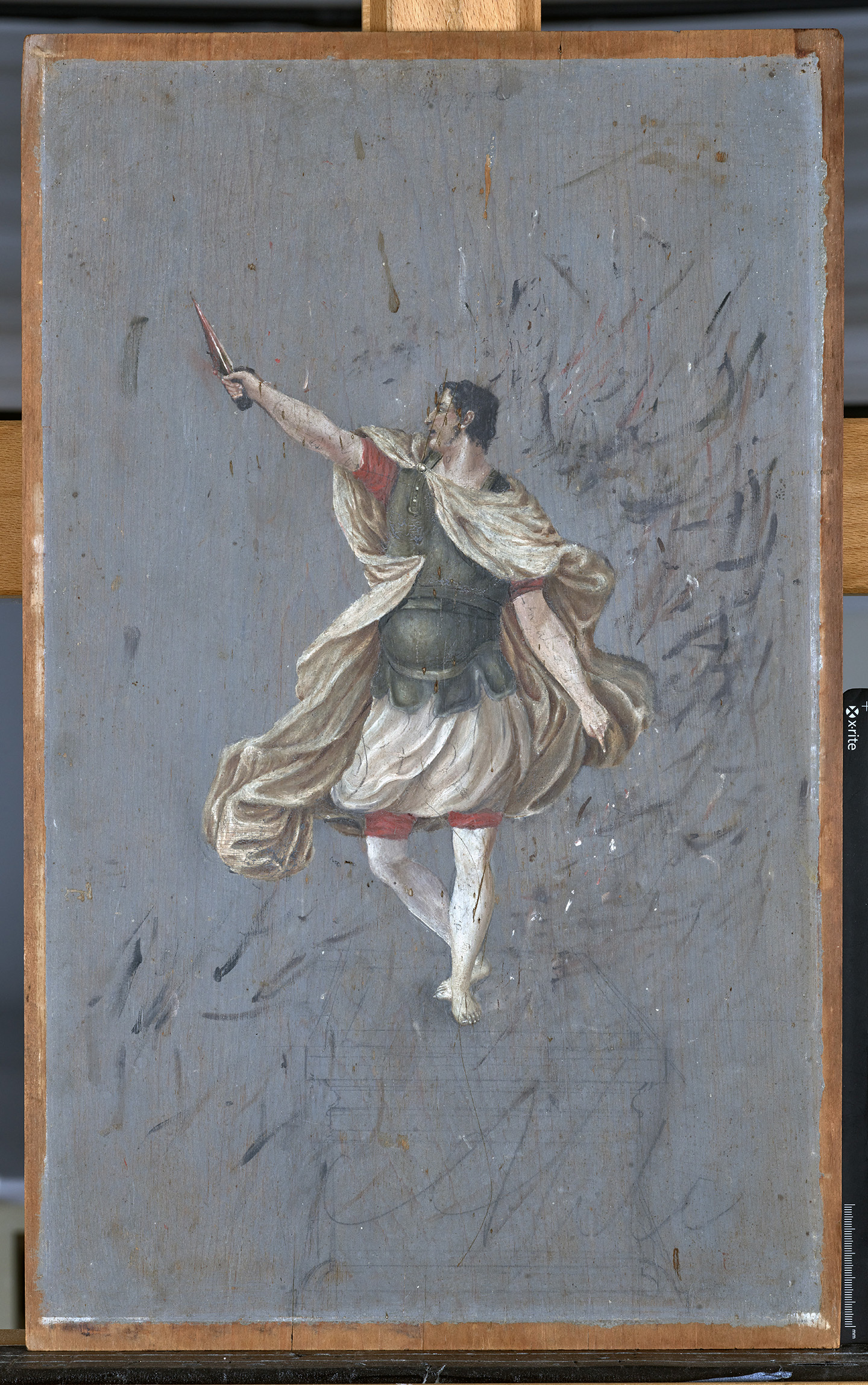
He even left his own mark physically on the house–as we see in his painting of Virginius, a character in a Roman story who stabs his daughter to death to defend her virtue from an unwanted suitor. This tale is linked to the transformation of the Roman Republic into an empire. John’s interest in capturing dramatic events–Virginius holds the bloody knife high as his cape whips around him–started early and would continue for the rest of his life. John, like other young men of prominent New England families, attended Harvard. He served in the army during the Revolution, and then moved to England where he studied under painter Benjamin West. Over his career he completed several paintings which depict prominent people and events of the Revolution, four of which we find in the next and last room of the tour.
Finally, we come to the only room in the house that isn’t being restored to its former appearance, an office-turned-Art Gallery. John’s four paintings which appear in the US Capitol Rotunda in Washington, DC will appear on the four walls here, and include a video about the artist from the Architect of the Capitol. The paintings which will appear as reproductions are Declaration of Independence, Surrender of General Burgoyne, Surrender of Lord Cornwallis, and General George Washington Resigning His Commission. An image of a two-dollar bill appears to remind visitors that Declaration of Independence is featured on its reverse. Seating in the center of the room allows visitors to rest and take in the Revolutionary view provided by Governor Trumbull’s son John. Although sometimes at odds, together they helped win the war and still help us remember it today, two things that visitors may appreciate in this house.

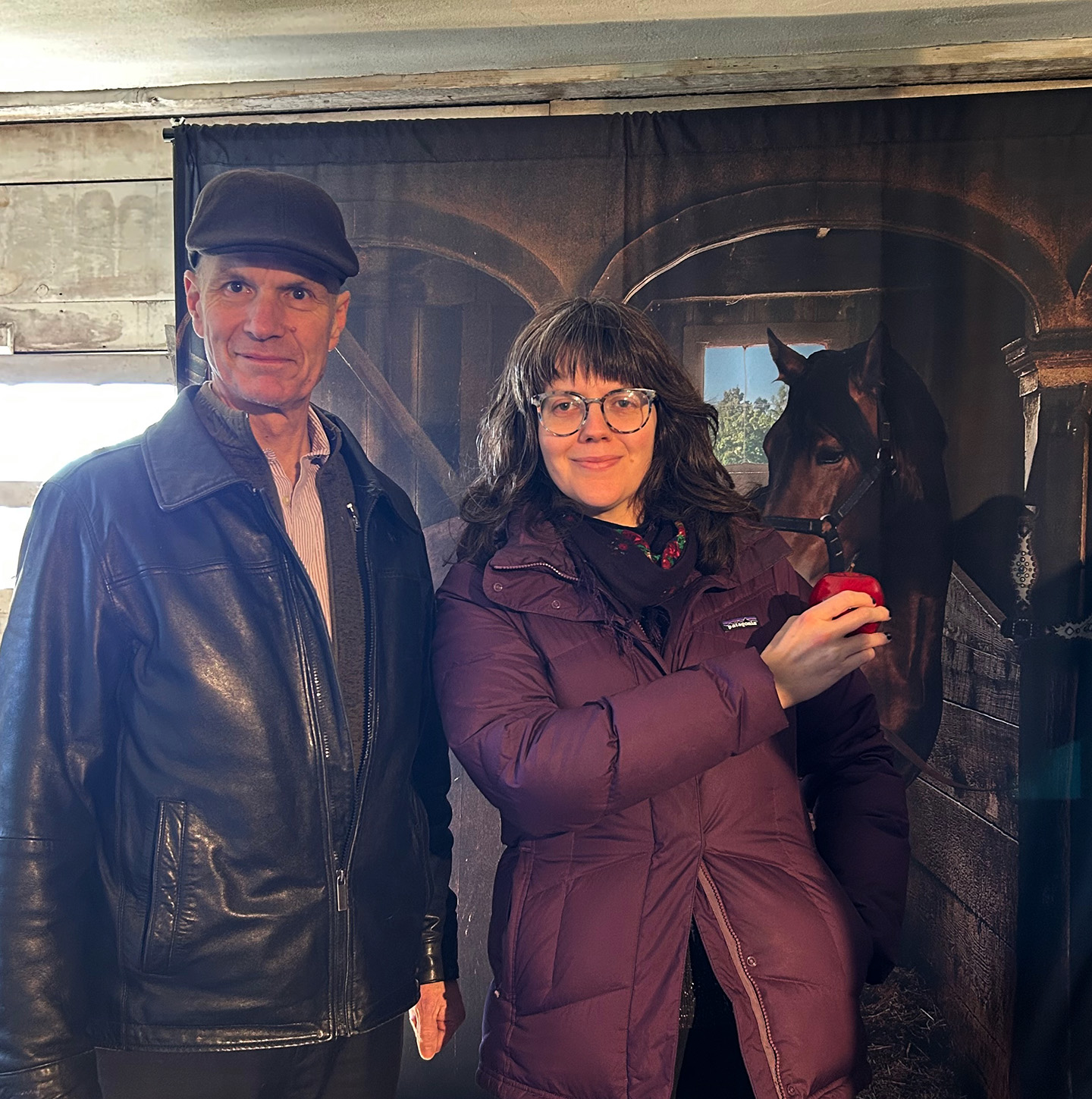
After our own tour of the house undergoing work, we stepped outside to visit the Wadsworth Stable, built unusually in a Palladian style. It is located next door on the property and contains a museum. Here we watched the complex process of spinning flax and enjoyed seeing the areas where children can sit on a saddle or take a selfie with a reproduction of George Washington’s horse.
If you’re tired after this journey to the eighteenth century and back, stop by the nearby Market on the Green for some goodies.
We are excited to continue this interpretive work and see visitors experience the house!
